Narrative contamination:
How GLP-1s are forcing a rethink of indication strategy and lifecycle planning.
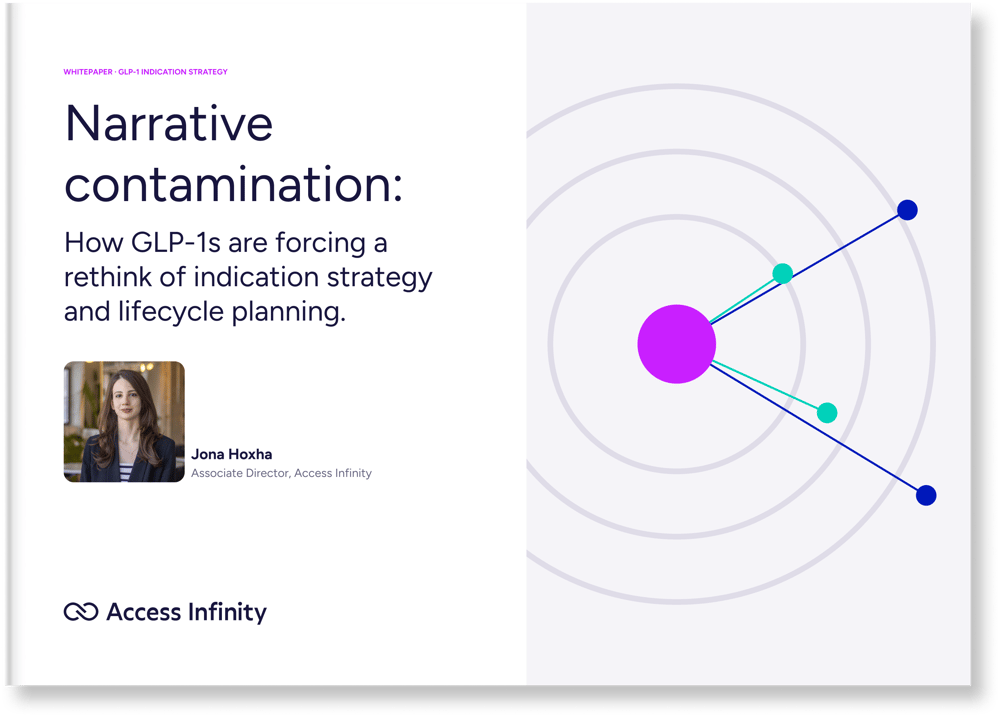
As GLP-1 therapies expand from obesity into cardiovascular disease, MASH, CKD and beyond, companies face a new strategic challenge: preventing the reimbursement and perception barriers associated with obesity from shaping access decisions in future indications.
Written by Associate Director, Jona Hoxha, this article explores why indication sequencing has become a critical commercial decision and how pharmaceutical companies can build distinct value narratives that protect long-term lifecycle potential.
What's inside?
Why obesity can become a commercial constraint if reimbursement narratives are allowed to carry into future indications.
The concept of narrative contamination and how early payer perceptions influence future access decisions.
How to build distinct value propositions for different disease areas while maintaining a coherent asset strategy.
Why pricing architecture matters from day one, and how early decisions can influence reimbursement across an entire lifecycle.
Download the whitepaper

ABOUT THE AUTHOR
Jona Hoxha, Associate Director
Jona has over 7 years in consulting, specialising in pricing and market access, with deep expertise in the cardiometabolic space. She has worked on pricing and access strategy for diabetes and weight management portfolios, including global GLP-1 portfolio architecture pricing, competitor benchmarking and early P&MA inputs for pipeline assets. Her broader work spans global pricing and access, landscape assessment, analogue analysis, and primary research with HCPs and payers across Europe, North America, APAC, and LatAm, and across haem-oncology, immunology, rare diseases, infectious diseases, and vaccines. A UK-qualified pharmacist, Jona also holds an MPhil in Management.
Get in touch: jona@accessinfinity.com